

Responsible manufacturing is not only about reducing energy use or choosing better materials. It is also about making products that last. When equipment fails early, the result is more waste, more replacement shipments, more warranty work, and more pressure on supply chains. For companies that build electronics, batteries, instruments, industrial components, or packaged assemblies, environmental reliability testing is one of the most practical ways to reduce these problems before products reach customers.
Products rarely travel through perfect conditions. They may sit in hot warehouses, move through humid ports, spend days inside shipping containers, or face cold storage before installation. A product designed in a controlled factory can experience a very different reality during transport and use. Heat, cold, humidity, and condensation can affect plastics, metals, coatings, adhesives, seals, printed circuit boards, sensors, and battery systems. If these stresses are not tested, weaknesses may only appear after the product has been shipped.
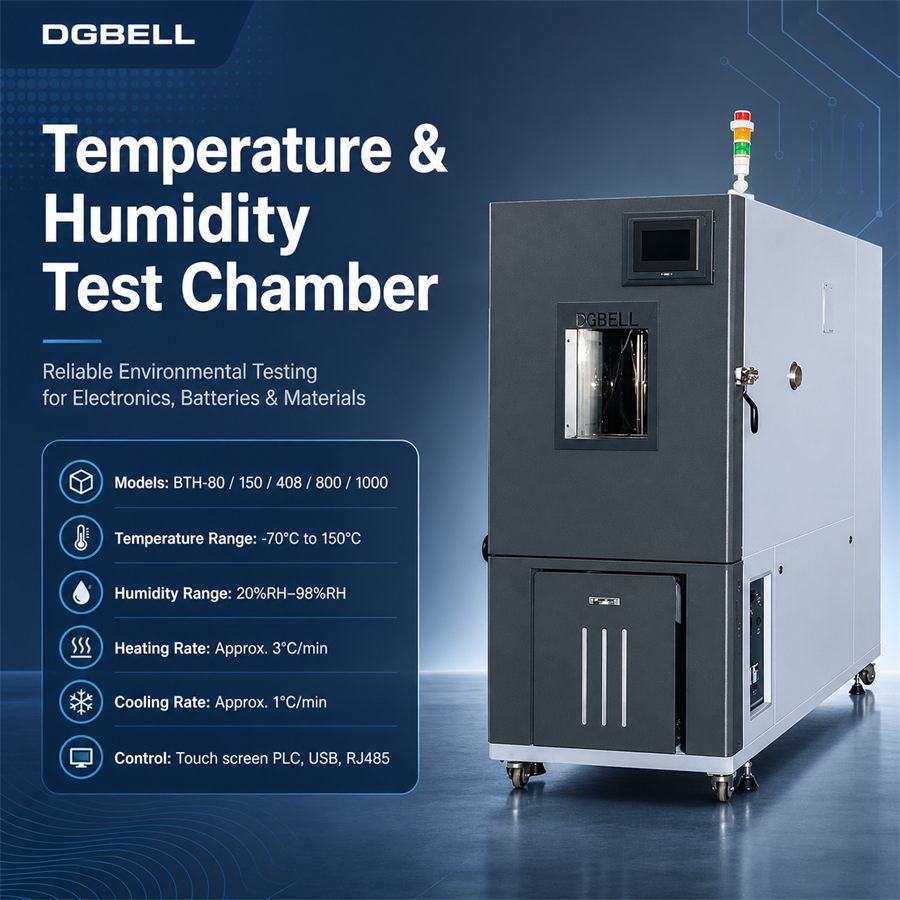
A controlled environmental test chamber allows manufacturers to simulate these conditions with repeatable temperature and humidity profiles. Instead of waiting for random outdoor exposure, engineers can define test conditions, place samples inside the chamber, and evaluate performance over a known period of time. This makes reliability work more measurable and easier to compare across different designs, materials, suppliers, or production batches.
Temperature testing is important because almost every material changes when it is heated or cooled. Plastics can soften, warp, shrink, or become brittle. Metals can expand and contract. Adhesives may lose strength. Seals and gaskets can change shape. Batteries and electronic components may behave differently at the edges of their operating range. By running products through controlled temperature exposure, engineering teams can identify risks that are not visible during a simple visual inspection.
Humidity testing is just as valuable. Moisture can cause corrosion, swelling, mold, insulation breakdown, coating damage, and electrical leakage. In some cases, the most serious risk comes from condensation that forms when a product moves between warm and cold environments. A chamber test helps teams understand whether moisture can enter an enclosure, where it collects, and how the product performs after exposure. These findings can lead to better sealing, improved ventilation, stronger coatings, and more suitable packaging.
Environmental testing also supports better supplier decisions. Many manufacturers depend on global supply chains, and components with similar specifications can perform differently under stress. A new supplier may provide parts that pass incoming inspection but fail after repeated heat and humidity cycles. By testing representative samples, quality teams can compare performance and approve suppliers with more confidence. This reduces the risk of hidden defects becoming large-scale field problems.
For companies focused on sustainability, this kind of testing has a direct benefit. Durable products stay in service longer and generate less avoidable waste. If testing reveals a weak material, poor seal, or unstable component early in development, the company can correct the issue before producing large quantities. That prevents discarded inventory, replacement units, emergency shipments, and customer returns. Reliability is therefore not separate from sustainability; it is one of its foundations.
Packaging validation is another important use case. Many products are damaged before they are ever installed or used. Heat, humidity, long storage, and temperature changes can weaken cartons, films, foam inserts, labels, and moisture barriers. Testing packaged products under realistic conditions helps teams determine whether protection is sufficient or excessive. The goal is to use the right amount of packaging, not simply more packaging. This can reduce both product damage and unnecessary material use.
Environmental testing can also improve communication between departments. Engineers can use results to refine designs, quality teams can create better inspection plans, purchasing teams can compare suppliers, and sales teams can answer customer questions with more confidence. When test results are documented, they become part of a shared technical record. This helps companies avoid vague claims and instead discuss product durability with evidence.
Testing does not need to begin with an overly complex program. A practical first step is to identify the most likely environmental risks for each product. Some products are most vulnerable to high humidity during transport. Others may be sensitive to cold starts, high storage temperature, condensation, or repeated thermal cycling. Once the main risks are clear, teams can create focused test profiles and expand them as they learn more from results.
Choosing the right chamber depends on sample size, temperature range, humidity range, ramp rate, control accuracy, uniformity, safety features, and data recording needs. Smaller chambers may be suitable for components and electronics, while larger products may require walk-in capacity. Calibration and maintenance support are also important because reliable test results depend on stable equipment and accurate controls.
As products become more advanced and customer expectations rise, environmental testing will continue to play a larger role in responsible manufacturing. It helps companies discover weaknesses earlier, design with real conditions in mind, reduce avoidable waste, and support longer product life. For manufacturers that want to connect quality with sustainability, controlled environmental testing is a practical step that produces useful evidence and better decisions.
Environmental reliability testing is also useful when companies update an existing product. A small change in material, supplier, coating, adhesive, cable, enclosure design, or packaging can affect long-term performance. Without testing, these changes may seem minor during production but create unexpected failures later. Running a focused chamber test after a design or supplier change gives teams a clearer view of whether the update is safe to release.
The same approach can support customer-specific requirements. Some buyers need products that can handle coastal humidity, high warehouse temperatures, cold starts, or long transport routes. Instead of answering with general promises, manufacturers can create test profiles that reflect those requirements and share the results internally or with customers when appropriate. This makes technical discussions more concrete and helps buyers trust the product evaluation process.
Good testing also encourages better documentation. Recording test conditions, sample details, inspection results, and failure observations creates a knowledge base for future projects. Over time, this data helps teams recognize patterns, avoid repeated mistakes, and design stronger products from the beginning. In that sense, environmental testing is not only a quality control step. It is a long-term learning system for more reliable and responsible manufacturing.